Category: Hampton Proton Stories
-

Hampton University President on Proton Cancer Institute’s new goals on Coast Live
Hampton University President Darrell K. Williams sits down with April Woodard to discuss the Hampton University Proton Cancer Institute’s new initiative and goals, broadening the reach of its mission to fight cancer and save lives.
-
Hampton University rebrands proton and cancer therapy center
Hampton University’s proton therapy center is starting a new chapter with a new name.
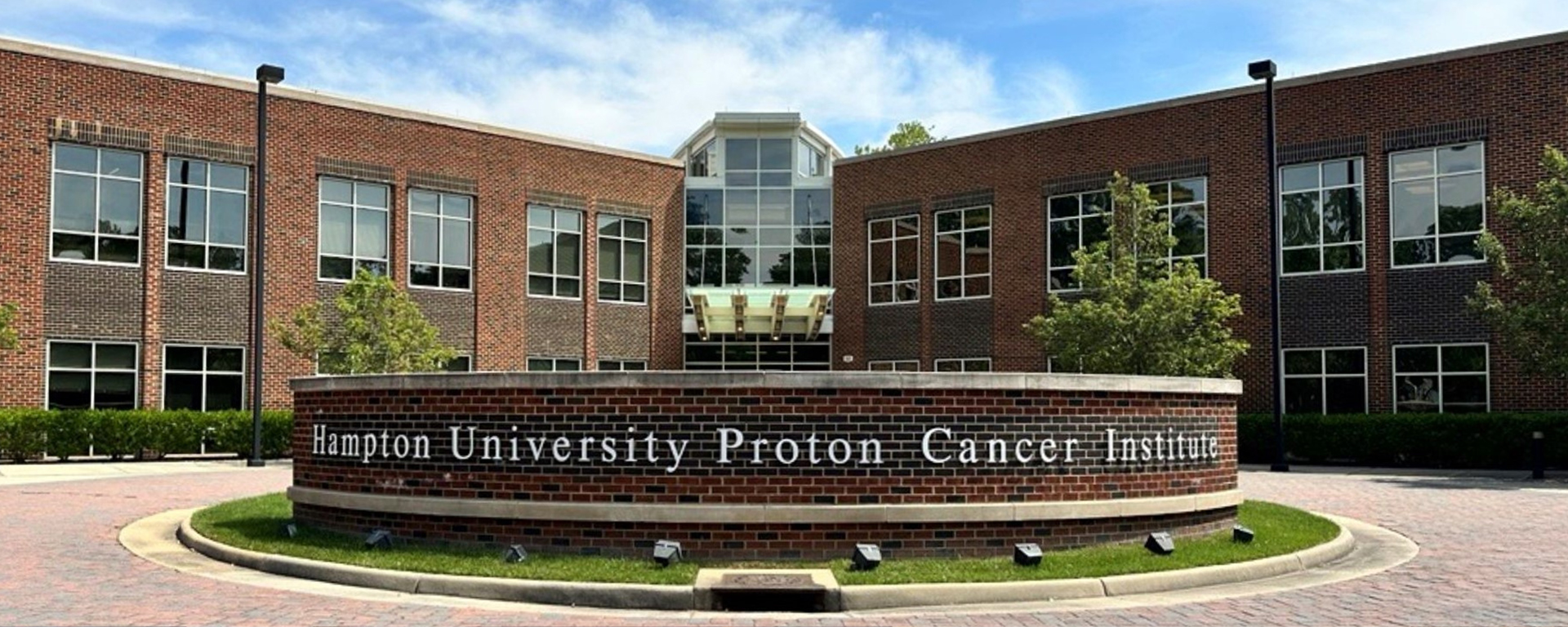
On Friday, the institute unveiled a new logo to go along with the center’s new name — the Hampton University Proton Cancer Insitute.
The institute has been offering cancer patients groundbreaking treatments for more than a decade.
-

Attorney General Jason Miyares says insurance companies can’t deny cancer treatment to patients
HAMPTON, Va. — News that you have cancer makes you think of your options. On Friday, Attorney General Jason Miyares issued an opinion about one particular treatment that isn’t always easy for cancer patients to receive.
-

Letters for Oct. 2: Hampton University Proton Cancer Institute is ‘world-class’
Having recently completed proton therapy at the Hampton University Proton Cancer Institute, I recommend Hampton Proton as an excellent option for cancer treatment. I want to publicly thank Dr. Allan Thornton and his excellent staff. Everyone I encountered was personally dedicated to my treatment as if I were their only patient.
I chose Hampton Proton for my treatment over the other options of surgery or conventional radiation. After research I found that for my particular cancer, proton therapy was as effective as those other treatments, but without the invasive side effects. I was confident and comfortable with my decision.
-
Real Men Wear Gowns: The Importance of Early Cancer Detection
According to CDC analysis of the period between 2001 and 2020, 170.3 men died of cancer per 100,000 compared to 124.5 women per 100,000.
There are various reasons for the higher rate of cancer deaths among men, but one is undoubtedly a lack of early detection and cancer screening adherence.
There are ways in which society puts a greater emphasis on cancers that commonly affect women. The National Cancer Institute estimates that roughly $515 million was invested in breast cancer research in 2020 compared to $212 million for colorectal cancer and $209 million for prostate cancer. Because of media attention and the clever marketing of the pink ribbon symbol, it’s likely more people are familiar with Breast Cancer Awareness Month (October) than Prostate Cancer Awareness Month (September).
One of the best things to happen to cancer advocacy for men was the “Real Men Wear Gowns” campaign that started in the aughts. Including athletes and celebrity advocates for male cancer screenings helped broaden the campaign’s appeal, which sought to encourage men to put their families first and endure the temporary discomfort of colonoscopies.
Unfortunately, men have a particularly high risk for some cancers (especially prostate cancer for Black men). Deaths have been decreasing in recent years due to advancements in treatments like proton therapy – but survivability rates are still dramatically different for patients with early-stage cancer compared to late-stage cancer.
Are Black Men More at Risk for Prostate Cancer?
- Black men are 1.7 times more likely to be diagnosed with prostate cancer than white men.
- They are 2.1 times more likely to die from prostate cancer.
- White men over 50 have slightly higher prostate-specific antigen testing (PSA) rates at 37 percent compared to 33 percent for Black men.
Cancer screenings do save lives. More than 99 percent of men who receive an early prostate cancer diagnosis survive at least five more years.
An Honest Assessment of Cancer Screenings
Honesty is important in any discussion of preventative cancer screenings. Cancer screenings and early diagnoses are not guarantees of treatment success, but they significantly increase survivability. There are also rare circumstances where testing can be problematic, specifically after a patient receives a false positive or false negative.
Risks Associated with Overdiagnosis of Symptomless Cancers
- Unnecessary anxiety
- Additional costly visits with oncologists
- Having to undergo invasive and sometimes expensive diagnostic procedures, imaging and biopsies
- Unnecessary prostate cancer surgery can have traumatic side effects, including urinary incontinence and impotence
Do the Benefits of Cancer Screenings Outweigh the Risks?
There are significant benefits to developing more sensitive tests that are better able to detect cancer in early stages, but these tests often come with higher rates of false positives. It’s important for oncologists and cancer researchers to clearly show that the benefits of new testing methods outweigh the negative repercussions of false positives or that new testing methods reduce the prevalence of inaccurate results.
What Are Multi-Cancer Early Detection (MCED) Tests?
As the name suggests, these innovative tests are designed to detect multiple types of cancer, potentially even before symptoms appear, with a single blood sample. The test analyzes biomarkers like cell-free DNA, RNA, proteins and other metabolic or genetic substances released into the bloodstream by cancer cells.
The goal of increasing early detection rates is laudable. Still, patients must realize these tests are not replacements for traditional screenings like mammograms and colorectal cancer screenings, which are still necessary after an initial positive MCED. A risk with these tests is that the ease with which they are performed may contribute to higher rates of false positives.
Should You Undergo Early Cancer Screening?
People, especially men, should base their decision on their age, overall health, family history of cancer and any personal risk factors they may exhibit. PSA tests can have false positives and may lead to overdiagnosis and overtreatment, but education can help mitigate some risks.
It’s usually best not to let the unlikely worst-case scenario dissuade you from pursuing diagnostics that can potentially save your life.
People in need of cancer treatment in Eastern Virginia and the surrounding region should consider consulting with the Hampton University Proton Cancer Institute (Hampton Proton). Its oncology team is made up of leaders in the revolutionary field of proton therapy, which can drastically decrease the potential side effects of cancer treatment. Call 757-251-6800 to find out if you’re a candidate for proton therapy.
-

Partnering with Leo Cancer Care
Hampton Proton is partnering with Leo Cancer Care for an exciting new therapy option. Learn about Marie, a new Upright Patient Positioning treatment.
-

Hampton University Proton Cancer Institute (Hampton Proton) Receives the Alpha East Community Service Award
Hampton, Va. (April 18, 2023) – The Hampton University Proton Cancer Institute (Hampton Proton) was recently honored by Alpha Phi Alpha Fraternity, Inc. with the Alpha East Community Service Award in recognition of their outstanding work in the area of cancer treatment and research during their 91st Annual Eastern Regional Convention in Hampton, Va., at the Hampton Roads Convention Center.
Receiving on behalf of the university are (pictured from left to right): Dr. Walter T. Tillman Jr., Hampton University Vice President, Chief of Staff and Associate Professor of Education and Tiffany Velez Rodgers, Hampton Proton Marketing Director.
About Hampton Proton
The Hampton University Proton Cancer Institute (Hampton Proton), established in 2010, has successfully helped fight the cancers of more than 3,500 patients from across the globe. Located in Hampton, Virginia, Hampton Proton is the largest standalone proton treatment center in the country, and at its inception, was the eighth center in the United States.
Proton therapy is universally accepted as a viable and effective method to treat many forms of cancer – one of the top killers in Virginia. It is a noninvasive option that precisely targets the tumor, sparing healthy tissue. At Hampton Proton, patients receive outpatient treatment in about 30 minutes, which means no hospital stays, allowing them to maintain their current lifestyle. The center treats several types of cancer, including breast, lung, prostate, head and neck, ocular, brain and spine, gastrointestinal and pediatric tumors. For more information, www. hamptonproton.org.
About Alpha Phi Alpha Fraternity, Inc.
Alpha Phi Alpha™, the first intercollegiate Greek-letter fraternity established for African American Men, was founded on December 4, 1906™ at Cornell University in Ithaca, New York by seven college men who recognized the need for a strong bond of brotherhood among African descendants in this country. The fraternity initially served as a study and support group for minority students who faced racial prejudice, both educationally and socially, at Cornell. The Jewel founders and early leaders of the fraternity succeeded in laying a firm foundation for Alpha Phi Alpha’s principles of scholarship, fellowship, good character, and the uplifting of humanity. For more information, visit: Our History – Alpha Phi Alpha (apa1906.net)