Category: Hampton Proton Stories

  • Hampton Proton Hosts Behind-the-Scenes Tour and Demonstration of their Award-Winning Cancer Treatment Facility for the Osher Lifelong Learning Institute

    Hampton Proton Hosts Behind-the-Scenes Tour and Demonstration of their Award-Winning Cancer Treatment Facility for the Osher Lifelong Learning Institute

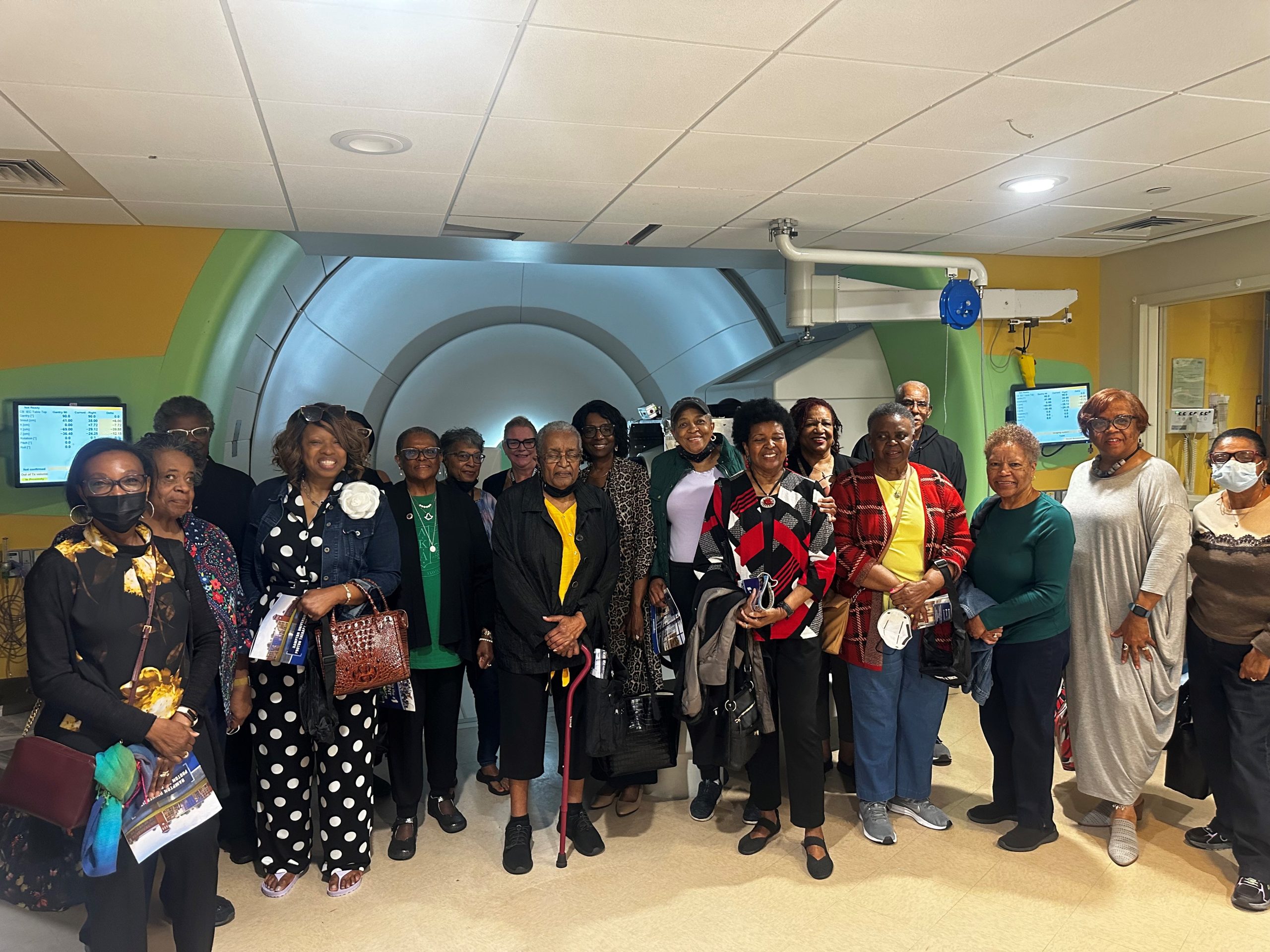
    The Hampton University Proton Cancer Institute (Hampton Proton) recently presented a tour and lecture to more than a dozen members of the Osher Lifelong Learning Institute (OLLI), a membership-driven organization through Hampton University which offers non-credit courses to mature adult learners 50 years and older. OLLI’s affordable adult education courses cater to lifelong students who want to improve their skills, explore new ideas, and interact with interesting peers in their community.
    Executive Director MaryBeth Sullivan kicked off the visit with a presentation titled, “An Introduction to Proton Therapy,” which provided behind-the-scenes access to Hampton Proton operations and the proton therapy treatment process. The visit included a tour of one of the treatment rooms, an imaging suite that houses Hampton Proton’s MRI and PET/CT systems, and a demonstration of the equipment that delivers critical care.
    “The Hampton Proton Team is always excited to show groups like Osher around the facility,” Sullivan said. “This allows the public the chance to look behind the scenes at our facility and how we fight our patients’ cancers daily.”

    see the story on Hampton University’s website  HERE.

  • Enhancing Proton Therapy Treatments with Upright Patient Positioning Via a Partnership with Leo Cancer Care 

    Enhancing Proton Therapy Treatments with Upright Patient Positioning Via a Partnership with Leo Cancer Care 

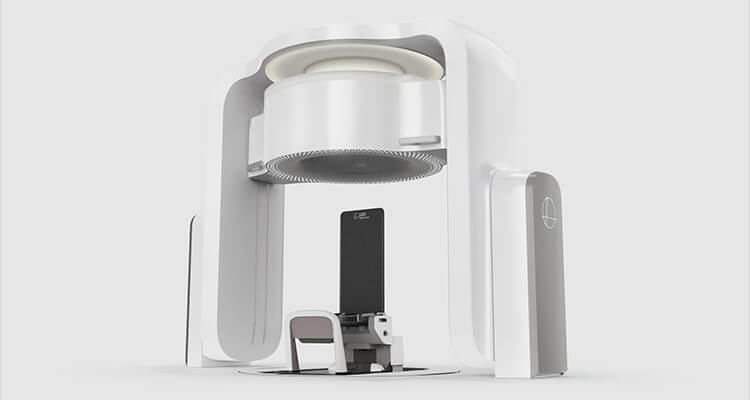
    The Hampton University Proton Cancer Institute (Hampton Proton) team is proud to announce a new partnership with Leo Cancer Care. Hampton Proton will install a cutting-edge upright patient positioning system and CT scanner into an existing fixed-beam proton therapy treatment room. Proton beam therapy has been recognized as a viable and effective treatment modality for the noninvasive elimination of many types of cancer cells.

    As with many of the targeted, noninvasive cancer treatments being aggressively developed by the medical community, proton therapy aims to minimize the damage to healthy tissue and organs surrounding the infected area. According to Hampton Proton’s Chief Medical Physicist Dr. Alejandro Carabe, this new targeting method will enable the center’s oncologists to be more precise, more effective and more efficient in treating patients.

    How Is Upright Patient Positioning Different from Current Targeting Methods? 

    Proton beam therapy already features the ability to target beams from multiple angles. This flexibility enables specialists to choose paths that minimize healthy tissue exposure to radiation, but it’s far from perfect and doesn’t provide unlimited treatment options. Doctors are still restricted by the angles that allow optimal beam exposure to cancerous cells.

    Proton arc therapy (PAT) enables the delivery of beams via the angles that can be optimized for cancer targeting, ultimately improving treatment prognosis. Patients can sit in a reproducible position for precise repeated irradiation of target tumors throughout their treatment regimen.

    Humans spend most of their day upright. It’s the position in which they often feel most comfortable, empowered and better able to communicate with clinicians during their treatment.  

    A vertical CT scanner will be installed at the center, which was intentionally developed as a means of imaging patients in an upright position. It consists of a ring mounted on a gantry supported by arms that can be tilted along a horizontal axis. This allows the CT ring to be adjusted along the arms via slide rails.

    According to Leo Cancer Care Chief Scientific Officer Dr. Niek Schreuder, the combination of the fixed beam room with the upright system perfectly suits the combined goals of advancing research while furthering Hampton Proton’s mission of PAT clinical development.

    One of Hampton Proton’s goals is to develop and test treatment methods that will help their current and future patients and cancer patients worldwide. The center is proud to be a leading player in this line of cancer treatment advancements and is excited to discover what the partnership with Leo Cancer Care will accomplish.

    About the Installation 

    According to Stephen Towe, the Chief Executive Officer of Leo Cancer Care, the installation project will occur in three phases. The patient positioning system and diagnostic-quality upright dual energy CT scanner will be installed as soon as possible on a non-clinical, experimental basis, as this step does not require FDA clearance or integration with the current proton therapy system.

    Pursuing a phased approach to the implementation of the partnership allows Hampton Proton’s doctors to continue traditional treatments so patients won’t have their treatments delayed. In addition, this will allow for an accelerated schedule compared to what would be allowed via full clinical implementation in a single-phase approach.

    Hampton Proton Executive Director MaryBeth Sullivan is enthusiastic about the partnership, saying, “We are so excited to be collaborating with Leo Cancer Care. Seated patient treatments and imaging is going to make treatments much easier for patients that are unable to lay flat. Hampton Proton will be the first on the east coast to have this ability with delivering proton therapy.”

    About Marie™ 

    The particle therapy patient positioning system Marie™ is named after Marie Curie, a celebrated pioneer in radiation research and, ultimately, the field of radiotherapy. More than a hundred years after her groundbreaking contributions, her memory inspires cancer treatment specialists worldwide, including at Leo Cancer Care and Hampton Proton. Combining Hampton Proton’s particle therapy solution with sophisticated upright patient position and dual-energy diagnostic quality CT scanning is a potential game-changer for many patients.

    This innovative combination is only one aspect of what makes Marie™ potentially revolutionary. The hardware is coupled with software developed by Cosylab, making the platform intuitive, easy to use and fast, greatly enhancing clinical efficiency and enabling doctors to treat more patients effectively.

    Exciting Times at Hampton Proton

    The doctors at Hampton Proton are passionate about what they do because life is a gift, and there’s no greater pursuit than giving patients and their families more time. The team at Hampton Proton is excited about the partnership with Leo Cancer Care and looks forward to discovering the positive impact this updated treatment modality will have on patients.

    Those in Virginia and the surrounding states who wish to learn more should visit Hampton Proton’s website or call 757-251-6800.

  • Helping Pediatric Patients Smile During a Difficult Time

    Pediatric patients undergoing proton therapy may require up to 40 treatment sessions. Many team members at Hampton University Proton Cancer Institute (Hampton Proton) have children and are acutely aware of how difficult the cancer treatment course can be for pediatric patients and their families.

    Hampton Proton is collaborating with other leading regional medical centers, such as Children’s Hospital of the King’s Daughters in Norfolk, to make treatment more bearable for our pediatric patients through our HUPTI Smiles initiative. Each child gets to select a new, wrapped toy or gift card during treatments. All the toys are kept in a huge chest to add some fun and levity to each visit. 

    Why HUPTI Smiles?

    One day in the midst of the COVID lockdown, Tiffany Rodgers, Marketing Director at Hampton Proton, glanced out her office window and saw a man with a young child approach the building.

    “I was like, why is that guy bringing his little boy? He needs to be in school,” says Rodgers. “As they walked closer and closer, I realized that the child might be a patient. My heart dropped.”

    Rodgers realized that the child, Marc-Thomas Hardy, was indeed a cancer patient. “I had only been in the job for three months and hadn’t seen a pediatric patient because children are only a small percentage of all the patients we treat.”

    Rodgers learned the story from the child’s father, Marcus Hardy, who told her that the five-year-old had been experiencing a lot of headaches. After several emergency room visits, an MRI confirmed that he had a brain tumor.

    Rodgers says Marc-Thomas “was heavy on my heart for days.” She wanted to do something to help the family and other children who must undergo treatment, usually consisting of 30 to 40 daily, back-to-back sessions.

    She went for a run and the answer came to her: toys. She and her girlfriends, and eventually others, donated funds to start a program that provides gifts to pediatric patients undergoing treatment. After every session, children select wrapped gifts to celebrate the completion of each session.

    The HUPTI Smiles initiative is now an integral part of the institute’s care for children. “We designate up to $250 per child, and we either give them toys every day or teens get a gift card weekly. We do something specifically for each child.”

    The nonprofit encourages those who want to help to contribute tax-deductible donations to support the initiative. While donations are accepted year-round, they are especially appreciated during the holiday season in November and December. “We have a toy drive, and lots of individuals, churches and organizations drop off toys.” Rodgers’ goal is to raise $25,000 this year.

    The project has served about 20 kids this year, and Rodgers hopes to double that number next year.

    In addition to purchasing gifts, Rodgers wants to redesign the pediatric patient area, called the Norma B. Harvey Children’s Center. “We’d love to make the space COVID-friendly with more digital elements and features for our little ones and add more vibrancy to the space.” She welcomes organizations that might want to sponsor the update.

    “I hope people will consider giving so that we can provide gifts to every child,” Rodgers says. “It’s a little gesture, but it helps fuel the children and their parents to keep on fighting.”

    Why Is Proton Therapy Ideal for Pediatric Patients?

    Proton therapy treats localized cancers such as brain, lung, head and neck tumors and minimizes many of the side effects of radiation.

    “Proton therapy is really great for pediatric patients,” Rodgers says. “It spares the surrounding organs and tissue and allows kids to grow normally.”

    HUPTI, which opened 12 years ago, is the only proton therapy center within 100 miles of Hampton, VA. Many families must travel significant distances each day to undergo treatment at Hampton Proton.  

    Would You Like to Contribute to HUPTI Smiles or Learn More About Proton Therapy?

    Get in touch with Tiffany Rodgers or the team at Hampton Proton by calling 757.251.6800.

  • Let Us Be a Part of Your TEAM of Doctors

    Let Us Be a Part of Your TEAM of Doctors

    No single medical professional holds all the solutions for health and wellness. Having multiple specialists in addition to a primary care physician should allow you to make more informed decisions and maximize your access to effective treatment solutions.

    Unfortunately, even great doctors may fail to make full use of interprofessional collaboration. This isn’t necessarily due to the inadequacy of any specific doctor. Rather, long-standing norms simply don’t emphasize collaboration as a vital component of care.

    Some specialists, including the proton therapy experts at Hampton Proton, are determined to change that.

    As a cancer treatment center with a narrow focus on providing proton therapy, we will always be just one part of your medical team. Establishing and nurturing good working relationships with the primary care doctors, oncologists and specialists who manage our patients’ care is vital to our mission. 

    Working Together to Support Your Healthcare Outcomes

    Fragmented healthcare is just one of many hurdles that stand between patients and optimal treatment outcomes. The good news is fragmented care can be easily overcome through interprofessional collaboration and communication. When specialists collaborate on a patient’s care plan, they are far less likely to make mistakes, prescribe dangerous or ineffective treatments or misdiagnosis ailments.

    Interprofessional collaboration requires more than one doctor simply forwarding your medical records to a different specialist. Your doctors should actively share ideas, brainstorm and design an integrated plan of care to meet your unique needs.

    This unified approach is especially important for patients with cancer, as the outcome of your treatment plan will have a lasting impact on you and your family.  

    Preventing Errors

    “Medication overload” (or polypharmacy) is a recognized problem in American medicine. It’s a scenario in which different specialists prescribe multiple medications to treat the same condition. Elderly Americans will suffer an estimated 74 million adverse drug events due to polypharmacy over the next decade, which is expected to result in roughly five million hospitalizations. The problem is fundamentally caused by poor communication among doctors, and it’s a risk that can be easily eliminated through collaboration.

    Keep Costs Down

    Mistakes, delays and redundancies in testing and treatment can waste time and drive up your care costs and travel expenses. Interprofessional collaboration makes your healthcare dollars go further by streamlining your care across specialists and eliminating operational redundancies.

    Better Outcomes Lead to Superior Patient and Doctor Satisfaction

    Most doctors are passionate about helping people, and exceptional patient outcomes have a knock-on effect. Doctors experience better job satisfaction when patients enjoy optimal results, leading to better patient care and job performance across the board.  

    We hope our collaborative approach leads to superior patient outcomes and doctor satisfaction for the specialist with whom we work. Ideally, doctors who experience the benefits of interprofessional collaboration will further adopt it in their own practices.

    Make Hampton University Proton Cancer Institute Part of Your Medical Team

    Your health isn’t a competition. All your doctors are working toward the same goal. It’s only natural that they collaborate. At Hampton Proton, we take pride in our ability to utilize the knowledge and commitment of your exiting primary care doctor, oncologist and other specialists to enhance your proton therapy cancer treatment outcomes.

    You can learn more about proton therapy and our collaborative approach to care by calling us at 757.251.6800.

  • Striving to Reduce Cancer Treatment Racial Disparities in Virginia

    According to the American Cancer Society, African Americans have the shortest survival time and highest cancer death rates in the nation. The Hampton University Proton Cancer Institute (Hampton Proton) is committed to helping shrink health care disparities that affect underserved Black Virginians, especially as those disparities pertain to cancer treatment.

    African Americans in Virginia suffer from reduced health care quality and access compared to White Americans, even those of comparable income and education levels. Minorities with lower levels of income or education face even higher barriers to receiving adequate health care and are more likely to have untreated chronic or acute medical conditions, including:

    • Cancer
    • Cardiovascular disease
    • Diabetes
    • High-blood pressure
    • Complications from smoking

    Black men have the highest cancer incidence rate in the Nation and double the prostate cancer death rate of men in any other racial group. Data also suggests the average African American woman is approximately 40 percent more likely to die of breast cancer than the average White woman, and the death rate is double for Black women over the age of 50.

    African American death rates for stomach cancer, prostate cancer, myeloma and uterine cancer are approximately twice as high as the same cancer death rates among White Americans.

    Nearly a quarter of all African American deaths are attributed to cancer, making it the second leading cause of death for Black men and women. The five-year cancer survival rate for Blacks is statistically lower than it is for Whites due to socioeconomic barriers and an inability to easily access high-quality medical care.  

    Are Racial Health Disparities in Cancer Diagnosis and Treatment a Real Issue in Virginia and the United States?

    Yes–indisputable data makes it clear that there are significant cancer diagnosis, treatment outcome and survivability disparities between different ethnicities in the United States.

    There’s a strong correlation between segregated communities’ home to large African American populations and instances of undiagnosed cancer. Black people in these communities are more likely to receive a cancer diagnosis after their cancer has spread, contributing to reduced survival rates for lung cancer and breast cancer among African Americans.  Likewise, according to a study on VA health disparities, Black veterans had statistically lower rates of early colon cancer diagnosis, low rates of receiving curative surgery for stage I, II or III rectal cancer and lower three-year survival rates for colon cancer compared to White veterans.

    Hampton University, a historically Black research university located in Hampton, Virginia, is home to one of only a few proton therapy cancer treatment centers in Virginia. At Hampton Proton, we are acutely aware of how variables such as a patient’s geographic distance from oncologists, diagnostic facilities and cancer treatment centers can make receiving adequate care after a cancer diagnosis difficult.  We regularly have patients who travel significant distances to undergo their therapy sessions.

    Take Charge of Your Health and Future

    Our team understands how hard it can be to get access to the cancer treatment you need. That’s why we strive to work with patients to effectively coordinate their care. Providing flexible solutions that maximizes access to life-saving proton therapy for underserved Black communities in Virginia matters to us. There are many ways you can help offset a potential cancer diagnosis, such as participating in regular exercise, eating a well-balanced diet and scheduling regular pre-screenings with your health care provider in order to continue maintaining a healthy lifestyle. If you or a loved one have been affected by cancer, and proton therapy is a treatment option for you, please visit our website at hamptonproton.org or call us today at 757.251.6800 for more information.

    Click here to see the original article.